Your child starts climbing the AI Pathway.
Code Camp Nepal is currently focused on one flagship program: AI Pathway at Chelsea World School. Students learn to code by climbing a mountain journey: missions, projects, evidence, and increasingly serious AI understanding.
Where does your child fit?
One Band per Class, from Class 4 to Class 12. Every student enters where they are — no child is bored, no child is lost.
A learning path, not a collection of classes.
The AI Pathway is structured so children do not just make impressive demos. They build capability that compounds.
App-led core learning
The learning journey itself teaches, guides practice, captures evidence, and gives feedback. Adults strengthen the room; they are not the hidden curriculum.
Projects with proof
Each project produces visible work and evidence of reasoning: predictions, tests, debugging records, comparisons, explanations, and final artifacts.
Increasing responsibility
Younger students get more scaffolding. Older students gradually own logic, architecture, data, AI judgment, deployment, and problem definition.
Every capability goes from guided to independent.
A child may begin with hints and structure. Over time, they predict, build, test, debug, and explain with less help. That growth is what the pathway records.
Try it
Your child jumps into a hands-on task. Guided, bite-sized. The skill begins as a sketch — in progress, not yet proven.
In progressGet unstuck
A hint ladder first. A real mentor if needed. Being stuck is part of learning — mentors give direction, not answers.
GuidedMaster it
The skill resolves solid and earns confirmation. Your child genuinely can do it now — the milestone shows on their map.
Trained mentors. Adult supervision. Every session.
Every Code Camp session has a certified lead mentor and at least one assistant — inside the school building, during after-school hours.
- ✓The app carries the core learning journey; mentors strengthen the room and support students
- ✓Lead mentor + assistant at every session inside the school environment
- ✓Students advance through designed checkpoints, not random one-off workshops
- ✓Progress is captured as evidence parents can understand
Real sessions, real building.
No stock photos — this is Code Camp running after school: hands on keyboards, paper ideas turning into real projects.


What you see as a parent
No mystery, no “fine, I guess.” You can see exactly what your child can do now — and the next thing they’re reaching for.
The learning climb
A clear view of the current mission, checkpoints, and what your child is learning next.
Parent-safe proof
"I can now debug with evidence." Claims are tied to work your child actually attempted, tested, and explained.
Project portfolio
Projects become a record of growing capability: exact instructions first, then systems, data, AI, and technical judgment.
The program runs at Chelsea World School.
4:00–5:30 PM, twice a week, inside the school your child already attends. Snacks and transport home are provided.
What parents say
I could finally see exactly what she'd built — not just a grade, but the actual project. She's so proud to show it to us.
He used to come home bored after school. Now he stays behind for sessions. Whatever they're doing in there — it's working.
…and what the kids say 🙌
“I made a game where my cat dodges asteroids.”
— Aarav, Class 6
“Now I want to make an app for my mum's shop.”
— Priya, Class 7
What students are building
Real projects. Real skills. Completed by real students.
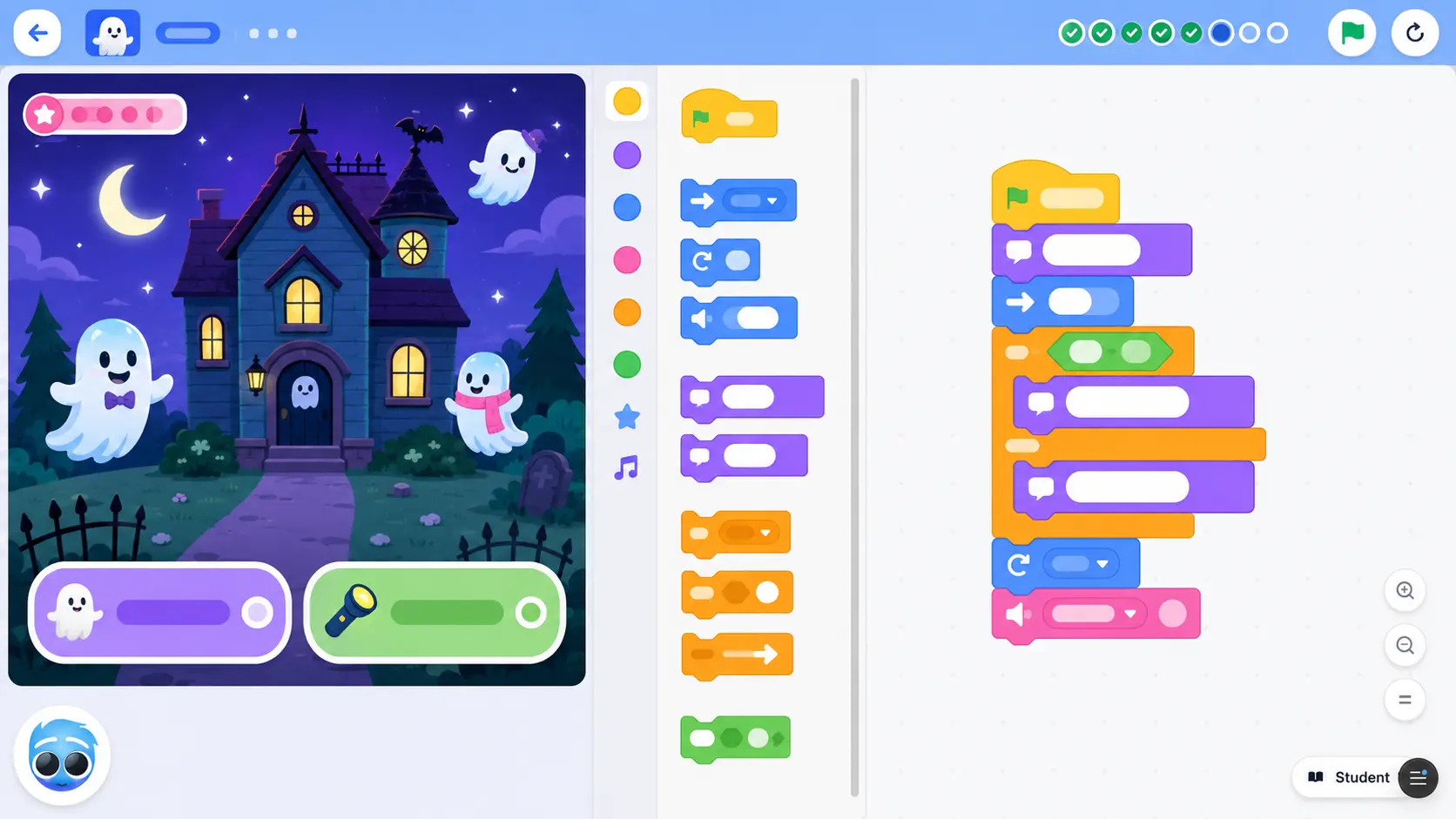
Robot Rescue Mission
A mission-world project where students guide Koda with exact steps, predictions, tests, debugging evidence, and a final explanation.
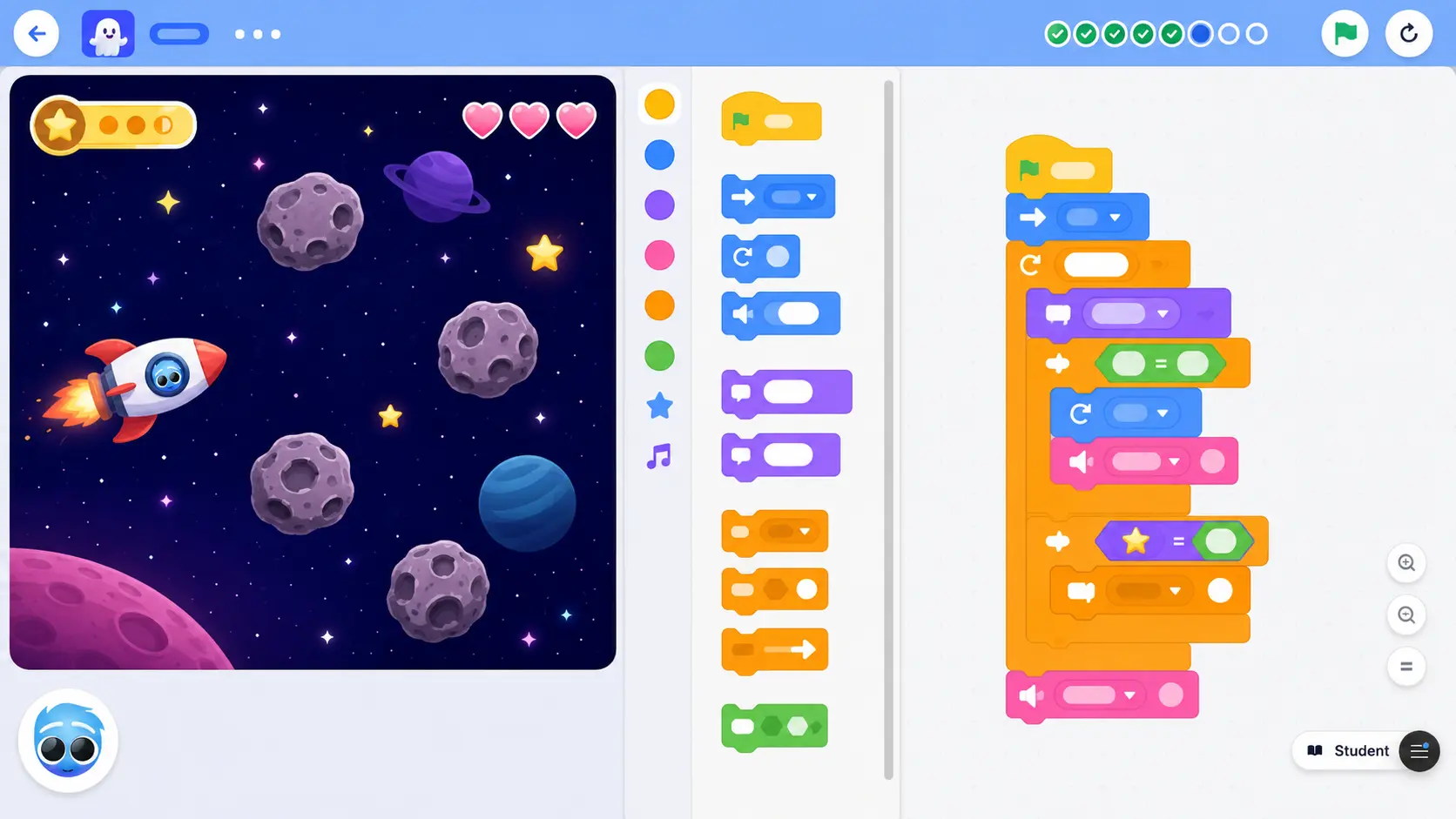
Adaptive Smart System
A multi-part interactive system with state, rules, data questions, a simple trained model, and a comparison between valid solutions.
Smart Decision System
A structured project where learners represent algorithms, write supported text-code pieces, inspect data, and repair AI-generated code.
Why not YouTube, Scratch, or a weekend workshop?
Each of these has value. Here’s where Code Camp is different.
Bring Code Camp to your school.
Curriculum, mentors, delivery — all handled by us. Zero internal build required.
Ready to find out if there's a seat for your child?
Seats per band are limited. Send us a message and we'll share the semester plan, current availability, and fee details — no pressure, just information.